Regenerative therapies · Carlsbad, in person
Low-level laser therapy
Noninvasive light-based therapy for pain and tissue recovery. Also called cold laser therapy or photobiomodulation, it supports cellular processes involved in healing as part of an individualized plan.
What is cold laser therapy?
Light, rather than deep heat.
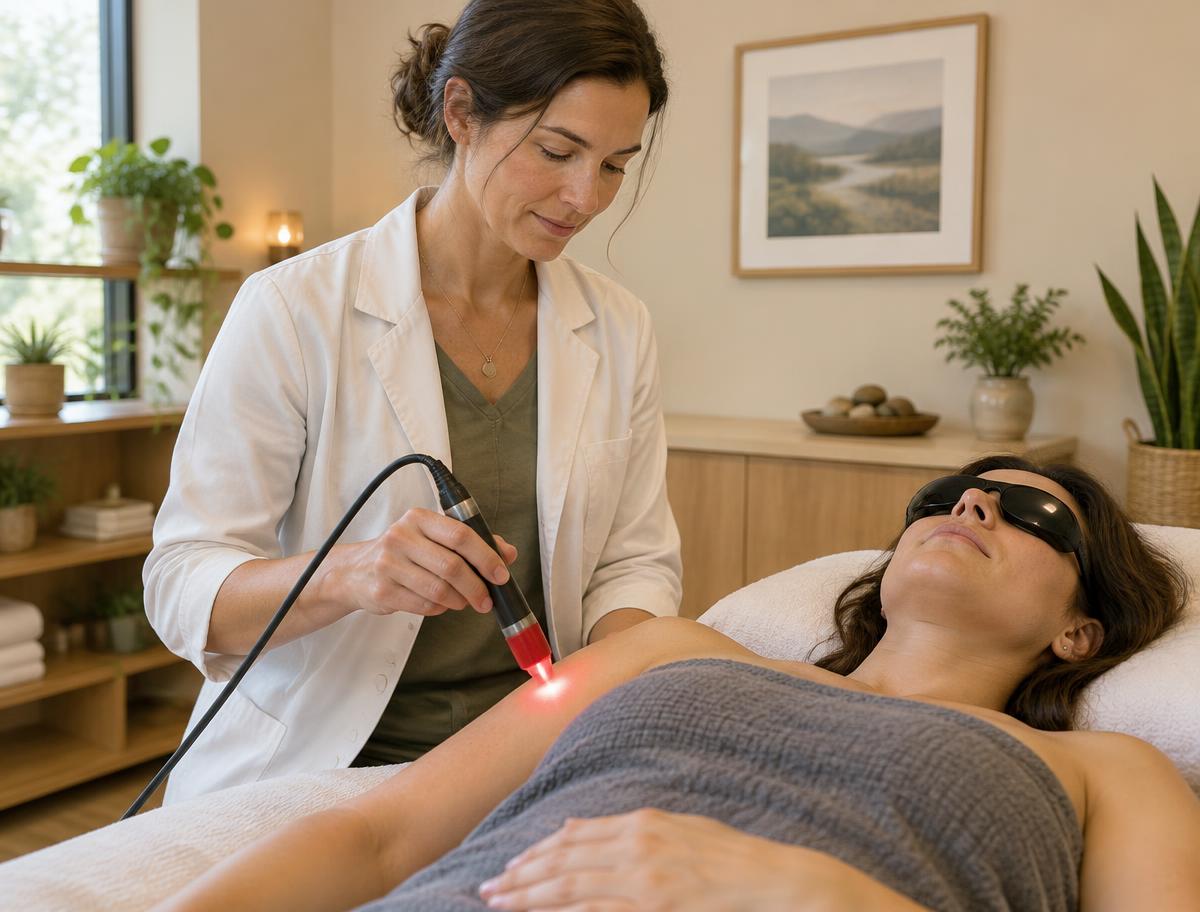
Low-level laser therapy delivers low-intensity light to a specific area of the body. Unlike surgical lasers, it is not used to cut, burn or remove tissue. The aim is to influence how cells respond to injury and inflammation, without creating deep tissue heat.
The response depends on the tissue, the condition being treated and how the light is delivered. Your doctor considers laser therapy in the context of your diagnosis, symptoms and broader care plan—not as a replacement for understanding why an area hurts.
Free 15-minute consultation • Virtual (CA & WI) or Carlsbad in-person
Photobiomodulation
Supporting energy production at the cellular level
Mitochondria help cells produce energy. Research on photobiomodulation explores how light interacts with cellular signaling, including mitochondrial activity, inflammation and tissue repair. These mechanisms help explain its potential, but laboratory findings do not guarantee a particular result for a patient.
Cellular energy
Light can influence mitochondrial activity and the processes cells use to produce ATP, their usable energy supply.
Inflammatory signaling
Photobiomodulation is studied for its effects on inflammatory pathways and the tissue response to injury.
Pain & tissue recovery
Changes in cellular signaling may help reduce pain and support repair. Clinical results vary by condition and treatment settings.
Considered case by case
Where laser therapy may fit
We may consider low-level laser therapy for the following concerns after an assessment. Evidence is stronger for some uses than others, and treatment is tailored to the individual.
Muscle & joint discomfort
For selected musculoskeletal concerns, laser may be considered alongside movement, rehabilitation and other measures that address the affected area.
Post-surgical pain
For persistent discomfort after surgery, we review the procedure, healing stage and any complications before discussing laser as a supportive option. Ongoing surgical follow-up remains important.
Nerve-related pain
Some nerve-related symptoms may be appropriate for a discussion about laser therapy. Understanding the cause comes first; laser does not promise nerve regeneration or permanent correction.
Localized tissue recovery
Laser may be incorporated into a plan for selected soft-tissue concerns, with attention to the stage of recovery and your response over time.
Your visit
What to expect
Treatment is directed to the area being assessed. Low-level laser is generally painless, and you may feel little or no sensation during treatment. Protective eyewear is used as appropriate for the device and treatment area.
- 01
Free 15-minute call
Every new patient starts with a free 15-minute discovery call. We discuss your concerns and whether an in-person assessment for laser therapy is an appropriate next step.
- 02
Assessment & treatment
Your doctor reviews your history, examines the area and discusses suitability before treatment. Let us know about recent surgery, medications and any changes in your symptoms.
- 03
Review & adapt
The number and spacing of sessions are individualized. We monitor comfort, function and your response, then adjust the plan rather than promising a fixed number of treatments.
Combined treatments
Low-level laser + INDIBA TECAR
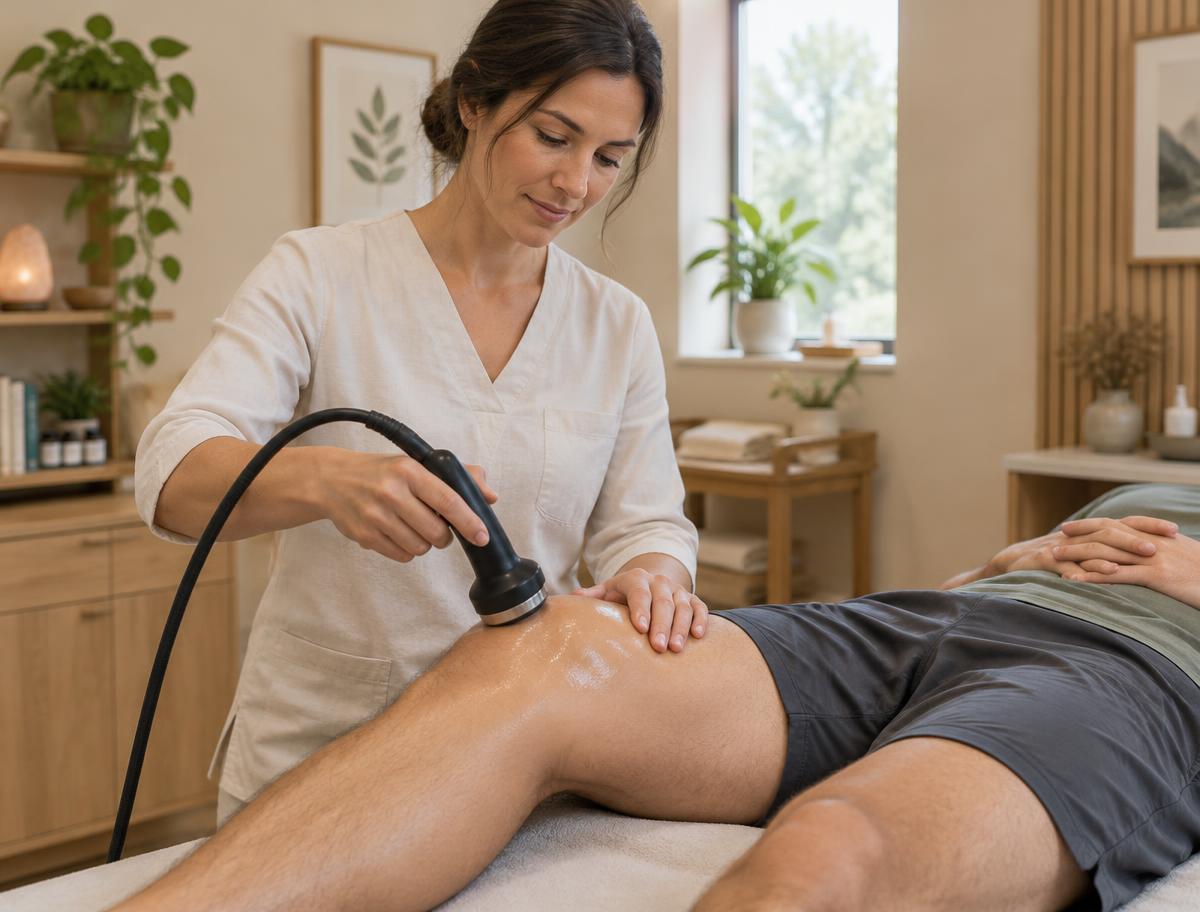
We often combine these therapies when appropriate. TECAR uses radiofrequency energy and can increase local circulation and produce deep warmth. Low-level laser uses light to influence cellular processes, including mitochondrial signaling and energy production.
They work differently and may complement each other within a single plan. Combining them is a clinical decision—not a guarantee of faster healing or a requirement for every patient.
Explore INDIBA TECAR therapySafety & suitability
Screening before treatment
Your doctor reviews your medical history and the planned treatment area before a session. Tell us about pregnancy, a cancer diagnosis, photosensitivity, medications that increase light sensitivity, recent surgery or a new or unexplained symptom.
Laser light must not be directed into the eyes. Device-specific precautions and eye protection are important. Treatment may be adapted or deferred depending on your circumstances, and it does not replace evaluation of an infection, surgical complication or other condition requiring medical care.
Clinical evidence
Scientific research
Research includes both laboratory studies of cellular mechanisms and clinical trials for specific conditions. Results depend on the diagnosis and treatment parameters; evidence for one use cannot be assumed to apply to every type of pain.
Musculoskeletal pain
A review of low-level laser mechanisms, dose response and clinical applications in musculoskeletal pain.
Read on PubMedPain-modulation pathways
A review exploring mechanisms of pain photobiomodulation, including how effects vary with light delivery.
Read on PubMed
Frequently asked questions
Is cold laser the same as a surgical laser?
No. Low-level laser therapy uses low-intensity light to influence cellular processes. It is not used to cut, burn or remove tissue.
Will I feel heat during treatment?
Low-level laser therapy is not intended to create deep tissue heat. You may feel little or no sensation. Tell your doctor if anything feels uncomfortable during a session.
How many sessions will I need?
That depends on the concern, your history and your response. Your doctor discusses the proposed plan and costs before you proceed, then reassesses as treatment continues.
Where do I start?
Every new patient starts with a free 15-minute discovery call. Laser sessions take place in person at our Carlsbad office; the treatment itself cannot be delivered during a virtual visit.
Start with a free 15-minute call.
Every new patient begins here — including lab reviews. Or call 760-306-4842.